This article was originally published in the Wisconsin Agriculturist.
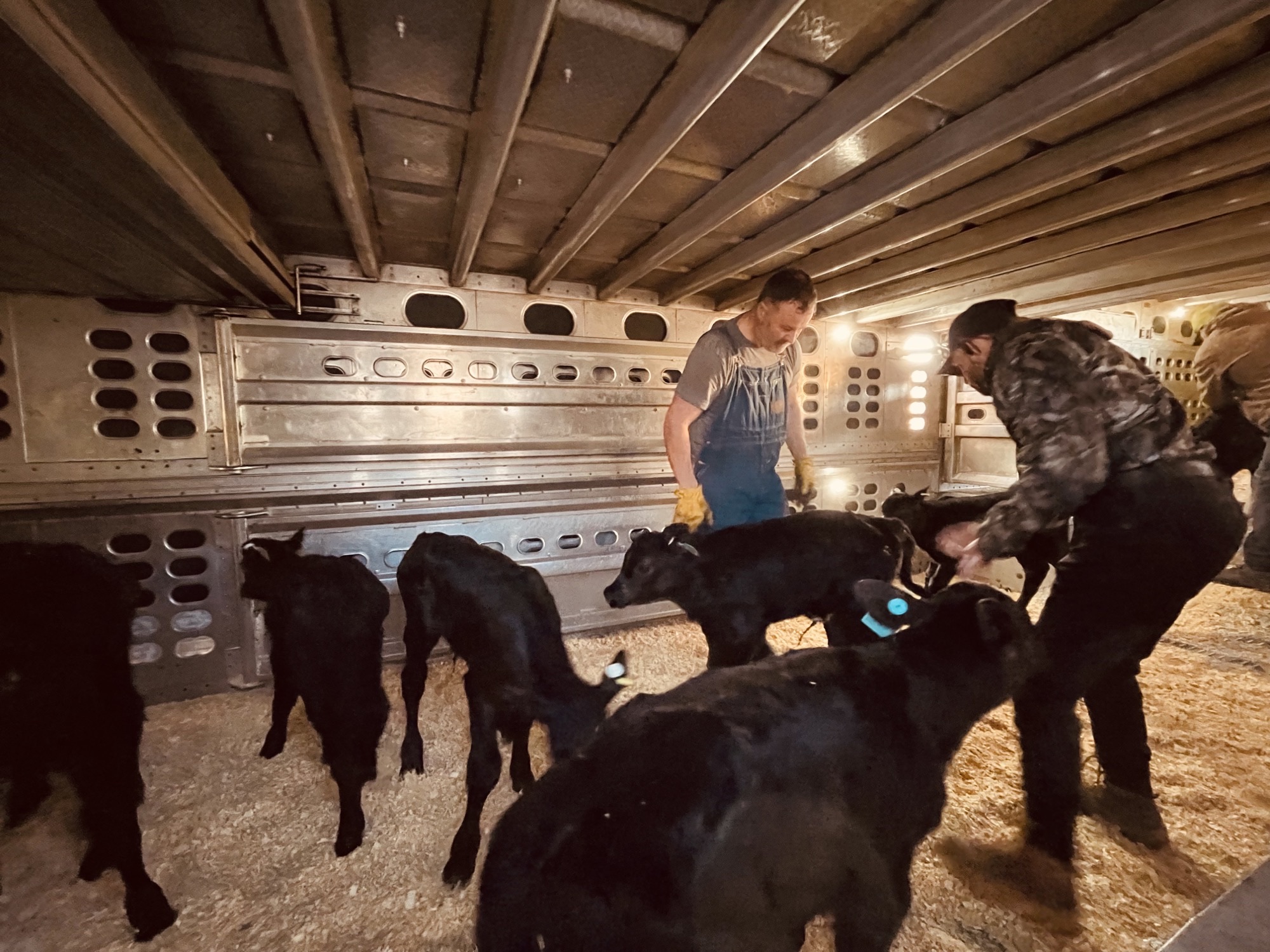
In Wisconsin, it has become more common for pre-weaned dairy heifers and bulls to leave the farm before one week of age. Calves of this age can be transported easily, but first, they need to be ready for the trip as they have a reduced capacity to withstand the challenges of transport.
Pre-weaned calves are more sensitive to transport stress than their adult counterpart due to their immature immunity system, the incomplete development of their body’s stress response mechanism (hypothalamic-pituitary axis), and their reduced ability to thermoregulate. Also, exposure to many normal everyday stimuli at a young age such as handling, loading, weighing, regrouping with unfamiliar animals, reduced access to feed and water during transport, and fluctuating temperatures provide another set of environmental stress impacting the calf’s welfare.
What makes a calf fit for transport?
According to AABP, fitness for transport refers to “the calf’s ability to withstand transportation without compromising their welfare”.
With limited research on the welfare impact of calves transported long distances, we can still make the calf fit for transport by following a few best management practices to minimize stress and improve calf welfare during its travels.
Preparing the calf for the journey
Preparing a calf for transport starts on day 1, at the time of its birth. A farm’s newborn calf processing practices should be followed regardless of if the calf is a heifer or a bull, or if the calf remains on the farm or is transported to another location.
Because calves are born with a naïve immune system, providing an adequate amount of high- quality colostrum is critical to calf health and is the single most important factor to prevent illness of young calves. In preparation for transport, the Association of Bovine Practitioners (AABP) recommends calves receive adequate amounts of high-quality colostrum or an appropriate colostrum replacement at birth to introduce immunoglobulins into the calf to jump-start the immune system. According to DCHA’s Gold Standards, calves should be fed an amount equal to 10% of the calf’s body weight within the first 2 hours of life.
Calves should also be properly identified by ear tag, with the information recorded. Secondary identification (second ear tag, photo, etc.) should also be used in the event an ear tag is lost. The tag should be carefully placed, without pinching the ear and allowing for calf growth.
Calves should receive all proper vaccinations and herd health management practices at processing, as agreed upon with the herd veterinarian as part of a Veterinarian-Patient- Client-Relationship (VCPR).
The navel should be properly dipped at birth, allowing the navel to be disinfected and to start the healing process. A properly healed navel will close off the opening into the calf, preventing pathogens from entering the newborn calf’s bloodstream.
Prior to loading
Dairy Beef Quality Assurance Program recommends calves to be a minimum of 3 days old at the time of transport. Calves should be bright, responsive, and alert, and be able to rise, stand, and walk on their own, without assistance, prior to transport. They should have dry hair coats for insulation. Delay any other stress-inducing procedures such as vaccination, dehorning, or other handling until a week after transport.
Calves should be healthy, free of visible disease, disability, and injury. Navels should be dry, not pink or fleshy, to minimize infection entering the calf and its bloodstream. Before loading, check for nasal and eye discharge, droopy ears, dehydration, scours, or any condition that might make the calf less able to withstand the stresses of transport. Sick calves are already stressed and will be at risk of further illness or injury during transport. Many symptoms of disease (such as dehydration) are exacerbated during transport.
Calves should be well-fed before transport, providing the needed energy for transport. Liquid feed should be fed 1 to 3 hours before transport for energy but also to prevent the formation of a casein clot in their abomasum from the stresses of loading and transport. Calves should also have access to fresh water for hydration and feed for additional energy prior to loading. For long hauls, electrolytes could be provided proactively before transport to minimize dehydration but will not replace the nutritional needs of the calf.
![Manejo Integral de la Diarrea Neonatal en Terneros de Leche [Video] ▶️](https://dairy.extension.wisc.edu/files/2026/09/2026-el-break-09-16-EN-440x275.jpg)